Posted in: Products & Equipment

Neoprene in the Open Water World

28.Feb.10   |  posted by: steve munatones  |   filed under: Products & Equipment   |  (0) comments

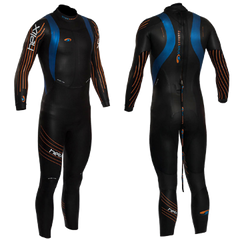
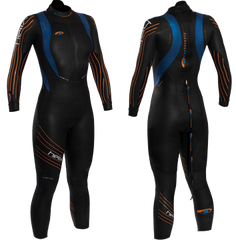
Despite all the recent controversy over technical swimsuits and the strong opposition from many coaches, swimmers, historians and administrators in the swimming world against the use of technical swimsuits and wetsuits in the open water, it is undeniable that wetsuits have enabled many hundreds of thousands of people to try - and enjoy - open water swimming.

History tells us that Dan Empfield, the founder of the highly popular website SlowTwitch, was responsible for this introduction of neoprene in the world of open water swimming, although his focus was on triathlons.

A highly successful entrepreneur and early leader in the world of triathlons, Dan also created Quintana Roo and specialty triathlon bicycles in the late 1980's. His early wetsuits provided the buoyancy, warmth and protection that newcomers to the sport of triathlon sought and greatly appreciated. Suddenly and steadily, droves of individuals took to triathlons and the open water. As the decade of the 1990's ended, the total number of wetsuit-clad triathletes outnumbered the open water swimming traditionalists.

Fortunately and not surprising, the market continues to offer something to both ends of the neoprene spectrum with race directors worldwide providing both wetsuit and non-wetsuit divisions.

What Dan Empfield started, Colin Hill, the innovative and energetic race director of the Great Swims as only one example, has taken to whole new level as the sport of open water swimming expands its reach.

Colin's perspective is interesting and enlightening because he is a proven English Channel swimmer, doing a 10:30 English Channel crossing without a wetsuit - only hours after he managed a race where thousands enjoyed the warmth and buoyancy that wetsuits offer.

"Great Swim has adopted a very open view on what people wear at our events. For the masses, unless the location dictates (Royal Victoria Dock is compulsory), wetsuits are optional if it is over 15°C. I wanted to get away from forcing people into wearing something that don’t want to. The water temperature at our events is between 16° and 18°C."

"Regarding the elite swimmers, we want to encourage elite athletes to race in our events. Some pool swimmers just don’t like the cold, plus we have triathletes taking part. If wetsuits are optional, then all the elites have to wear a wetsuit due to the advantages with a wetsuit than a pair of trunks. This is fine, although some of the more seasoned open water swimmers aren’t too keen on wetsuits, they are happy over a one mile."

"In my triathlon days, I raced in Europe where wetsuits were banned as the water felt like a bath. So putting all thoughts of sponsors and what the swimmers, coaches and managers want is right. At what point should we say, its too warm, don’t wear a wetsuit? I’ve done a short session in a pool in a wetsuit, but I couldn’t last very long. So is 25°C the maximum [allowable] limit? Or do we just not have a maximum limit and let them boil for 17 minutes? We don’t want rules for the sake of it, but safety and well-being of athletes are my concerns."

But traditionalists need not be alarmed as the English Channel and all the world's major marathon swims remain true to their non-neoprene roots. Similarly, races like those produced by NYC Swim and many races in Australia outlaw anything remotely offering buoyancy, warmth or compression panels. Other races, like the RCP Tiburon Mile in San Francisco, have a combination of rules that accommodate both the wetsuit- and non-wetsuit-clad athlete.

So whether you enjoy the challenge of open water swimming in a wetsuit or naked (i.e., without a wetsuit), there is a competition for you.

But Dan's original vision - keeping people warm and buoyant - was quickly accepted in the triathlon world and has gradually extended its reach to the vast world of the open water. And according to the official lore on American television (on the popular TV show called Jeopardy), Dan is the answer.

Copyright © 2010 by WOWSA

Tri It, You’ll Like It

16.Feb.10   |  posted by: steve munatones  |   filed under: Products & Equipment   |  (0) comments

Product: TRISLIDE, the anti-chafe continuous spray skin lubricant

Manufacturer: SBR Sport, Inc.

Price: US$13.45 for a 4 oz. aerosol spray can

Description: Anti-chafing skin lubricant in an easy-to-apply continuous aerosol spray

Sales Pitch: Keeping you comfortable and keeping you competitive

The liquid silicone-based TRISLIDE promotes easy and quick entry/exit from wetsuits and swimsuits and prevents chafing, blistering, irritation in the water and out. TRISLIDE does not damage neoprene materials as other petroleum-based products and cooking sprays do.

Would I Buy It? Yes, without a doubt.

Test Location: We tested in four locations among world-class athletes and beginner open water swimmers:
(1) In Italy in July at the 2009 World Swimming Championships in the warm Mediterranean Sea under slightly windy conditions;
(2) in the warm Copacabana Beach in November in Rio de Janeiro, Brazil at the 2009 Rei do Mar Desafio (King of the Sea Challenge) pro race;
(3) in Santa Monica, California during July at the Tower 26 ocean practices during both glassy-flat and rough conditions when waves got up to 3 feet; and
(4) in a 25-yard pool in Seal Beach, California at a 5:00 am masters swim practice.


Why? The liquid-silicone product, simply put, does what it says: it is an extremely effective anti-chafing lubrication that prevents friction and, very importantly, leaves no mess.

Upside: TRISLIDE has multiple benefits and can be used by triathletes, runners, walkers, rowers, surfers and cyclists. Very importantly, TRISLIDE can be easily removed with soap and water – something that cannot be done with lanolin. TRISLIDE is great to help you quickly slip out of a wetsuit or a speedsuit, a key benefit during a competitive triathlon. TRISLIDE is also not as messy as Vaseline® if it incidentally get smeared on your goggles. TRISLIDE was purposefully produced as an aerosol and not a gel or a stick. The spray application is a sanitary application because it does not harbor bacteria, whereas a stick directly touches the skin. Due to the aerosol spray application, your hands stay free - and clean - which is not always the case with Vaseline® or lanolin.

Test: During an hour-long ocean workout, TRISLIDE was tested by 16 triathletes and open water swimmers who sprayed TRISLIDE on one side of their body (underarms, inside thighs, ankles, shoulder or necks) and compared it with their other side (either covered with Vaseline, other lubrication products or nothing at all). The athletes were asked to rate the TRISLIDE on a scale of 10 with 10 being excellent and 1 being poor.

The results of this side-by-side test were as follows:

Athlete #1 (male): TRISLIDE did not chafe on left side. Other side with other product chafed.
Athlete #2 (female, age 32): TRISLIDE worked, but would try something else, 5 out of 10.
Athlete #3 (male, age 47): No chafing
Athlete #4 (female): No chafing, quick to get wetsuit off, 10 out of 10
Athlete #5 (male, age 34): TRISLIDE and the other product was about the same, 3 out of 10.
Athlete #6 (female, age 44): No chafing, TRISLIDE on one side, but chafed on other side, 10 out of 10.
Athlete #7 (male, age 45): Put TRISLIDE around neck, 10 out of 10.
Athlete #8 (male, age 38): No chafing on neck, 10 out of 10 compared to the other products.
Athlete #9 (male, age 44): Put TRISLIDE under arms, 10 out of 10.
Athlete #10 (male, age 41): Good, put TRISLIDE around neck, 8 out of 10.
Athlete #11 (female, age 55): Put TRISLIDE on neck, 8 out of 10, better than the other products.
Athlete #12 (female, age 39): Put TRISLIDE on neck, better than others, 10 out of 10.
Athlete #13 (male, age 40): Put TRISLIDE all over, slicker, cleaner, easier to get wetsuit off.
Athlete #14 (male, age 34): Works well around neck/feet/ankles/wrists, 10 out of 10.
Athlete #15 (male, age 30): No chafing, but about the same. Nothing special.
Athlete #16 (male, age 40): Put TRISLIDE all over, was using other products, 10 out of 10.


Downside: Like any lubricant used in the open water, TRISLIDE does come off over time. But for most triathletes who will be in the water for at most 2.4 miles, TRISLIDE will last sufficiently long. It is also lasts long enough so in the T1 transition, the triathletes can slip off their wetsuit and get into their cycling gear in a few seconds.

Note: we did not test in the water for over one hour, but we cannot imagine that the product will stay on longer than lanolin on the human skin. But certainly for swims under one hours, it is an independently confirmed to be sufficient and superior to other commercially available products.


Changes: We cannot imagine a re-design of the product that would improve the product, other than make the container larger. The small container (4 fluid ounces) is good for 15 – 20 applications, depending on how much is used during on each application.

Overall: If you chafe and compete in races 5K and under, TRISLIDE is a nearly an absolutely must-buy like a pair of goggles. The needs – chafing, blistering, slipping in and out of wetsuits – were identified and the TRISLIDE definitely met those needs. Overall, the product is a job extraordinarily well done and is colorfully and professionally presented and marketed. TRISLIDE would be a great gift for triathletes or open water swimmers.

Swimming in Socks

12.Feb.10   |  posted by: steve munatones  |   filed under: Products & Equipment   |  (0) comments

Daniel Kowalski, one of the most versatile freestyle pool swimmers in the world, finished third at this year's Big Swim wearing some...nice black socks.

A bit past his prime after winning 4 medals in the 200-, 400- and 1500-meter races at the 1996 and 2000 Olympics, Daniel was looking for an edge against his younger competitors. Voila ... a pair Compressport socks.

"There is no drag while wearing the socks and most of all they are really comfortable. Compressport helps to increase circulation. While your swimming there is a lot of upper body movement and for most of us very little in the lower legs. The body requires fresh clean oxygenated blood during efforts and in recovery. The compression helps."

The long sheathing calf socks, one of a range of veino-muscular compression products that are popular with triathletes and other land-based endurance athletes, helps reduce the accumulation of lactic acid in the legs and allows more efficient blood flow back from the legs to the heart. Basically, it helps reduce the discomfort when you are swimming hard, but we are just not used to seeing swimmers were...socks.

On the other hand, you can't knock a good performance.

San Francisco Takes Filmgoers To The Ocean

3.Feb.10   |  posted by: steve munatones  |   filed under: Products & Equipment   |  (3) comments

If any open water swimmers find themselves in San Francisco in early February, we strongly suggest they stop and enjoy North America's leading cinemaquatic movie festival in the heart of the city.

The San Francisco Ocean Film Festival is now in its seventh year.

The San Francisco Ocean Film Festival showcases 50 inspirational films that celebrate the sea and increase our appreciation of ocean sports, coastal cultures and the importance of the world's largest ecosystem.

The five-day event on February 3-7 produces ocean-themed films from all over the world that are largely unavailable to the general public with the purpose to entertain, educate and encourage active participation in ocean conservation.

With so many great films to choose from and limited time, open water swimmers may be particularly interested in the following films:

Journey to an Undersea Rainforest tells the story of the swaying forest of the world’s largest kelp thrives off of Souther California - invisible to land dwellers, but very well-known to Catalina Channel swimmers - nearly 800 species of invertebrates, fish, and marine mammals seek shelter and sustenance amid its 100-foot stalks.

The Comfort of Cold tells the story of San Francisco Bay swimmer 75-year-old Joe Illick who swims twice a day throughout the winter and is often in the running for endurance awards. When he isn’t swimming, he’s carving, painting, and writing poetry. —KH

Rowing the Atlantic tells of the story of Roz Savage's 3,000-mile trans-Atlantic rowing solo that became a trial by sea and the challenge of a lifetime. The towering waves, heaving swells and equipment failure make for a harrowing film - that Dan Martin, the similarly heroic trans-Atlantic non-wetsuit-wearing solo swimmer may face this April on his swim from New York to France.

White Shark Cafe tells the story of the great white sharks that visit the waters around the Farallon Islands to feed on the pinnipeds - that famed San Francisco swimmer Karen Rogers may face on her swim from the Farallons to San Francisco later this year.

Surfing Dolphins is a magical, lyrical montage showcasing dolphin with excellent water imagery and sound, the beautiful creatures who frequently escort open water swimmers throughout the Pacific Ocean.

From the Badlands to Alcatraz follows the story of five Native American swimmers from land-locked South Dakota who travel to San Francisco to swim Alcatraz Island, from their first plunge into the cold bay to their leap into the challenging waters off The Rock.

Following the footsteps of the famous, well-established ocean festival in Toulon, France (Le Festival du Film Maritime d'Exploration et d'Environnement à Toulon), now in its 41st year, the San Francisco Ocean Film Festival will show the following films:

1. Sylvia Earle: A Profile (USA) by Amy Miller and Joan Johnson
2. The End of the Line (UK) by Rupert Murray
3. Dieci Chili di Mare (Seaside Out) (Italy) by Francesco Uboldi
4. To Save the Whale (UK) by Gavin Newman
5. Symbiosis Mashup - Ocean for Life (USA) by Jeremy Polk & Lauren Demko
6. Journey to an Undersea Rainforest (USA) by Roger Uzun
7. The Cove (USA) by Louie Psihoyos
8. Physics of Sailing (USA) by Josh Rosen & Joan Johnson
9. Herring Gut Learning Center (USA) by Morgan Kirkham
10. Shaping a Life (USA) by Denise Galvao
11. In Altro Mare (In Other Sea) (Italy) by Franco la Cecla
12. In the Eye of the Whale (USA) by Kate Miller
13. The Comfort of Cold (USA) by Sara Newens
14. Rowing the Atlantic (USA) by J.B. Benna
15. Sounds of the Sea (Germany) by Volker Barth
16. Surfbus (USA) by Sachi Cunningham
17. Bicycle Trip (USA) by Patrick Trefz
18. Sea of Darkness (USA) by Michael Oblowitz
19. In Awe of the Shark (UK) by Caroline Brett
20. The Great White Shark Song (USA) by Andy Brandy Casagrande IV
21. Save Our Sharks (UK) by Caroline Brett
22. Whale Shark Island / Isla Holbox (USA) by Kip Evans
23. White Shark Cafe (USA) by Sean Aronson
24. Requiem (USA) by Bryce Groark
25. 2009 SAP 505 World Championship (USA) by Vincent Casalaina
26. Surfing Dolphins (USA) by Greg Huglin
27. Tragedies in the Mist (USA) by Jefferson Gray
28. Terra Antarctica (USA) by Jon Bowermaster
29. Vegetables from the Sea (New Zealand) by Adam Hermans
30. Wastewater Woes (USA) by Amy Miller & Sheraz Sadiq
31. What Would Darwin Think? (USA) by Jon Bowermaster
32. Arctic Cliffhangers (Canada) by Julia Szucs
33. Sea Horse Sleuths (USA) by Joan Johnson & Jenny Oh
34. Hobab e Sard (Frozen Bubble) (Iran) by Amir Joghataei
35. The Edge of the Sea (USA) by Maria Jose Calderon
36. The Whale that Ate Jaws (UK) by Jonathan Hughes
37. Indonesia's Reef Warriors (USA) by Roger Uzun
38. Ocean Melody - Ocean for Life (USA) by Danny Ledonne
39. Lost on a Reef (USA) by Stephani Gordon
40. Dipole (Netherlands) by Edward Snijders
41. From the Badlands to Alcatraz (USA) by Nancy Iverson (see photo above)
42. Reef's End (USA) by Shawn Heinrichs
43. The Bering Sea: An Ecosystem in Crisis (USA) by Brent Balalas
44. Acid Test: The Global Challenge of Ocean Acidification (USA) by the Natural Resources Defense Council
45. Magic Blue Wave (France) by Guy Chaumette
46. Free Swim (USA) by Jennifer Galvin
47. Ocean Chronicles (Spain) by Leandro Blanco
48. Life by the Tide (USA) by Joshua Cassidy
49. The Southern Passage (USA) by William Bayne
50. Alexandra's Echo (Canada) by Helen Slinger
51. South Georgia Island: A Southern Ocean Paradise (USA) by Corina Gamma, JJ L’Heureux and C. Hunter Johnson

The trailer for the San Francisco Ocean Film Festival is here.

Keep Your Swimsuits for USMS Open Water Events in 2010

29.Jan.10   |  posted by: steve munatones  |   filed under: Products & Equipment   |  (0) comments

Heather Hagadorn, Chairwoman of the new USMS Long Distance Swimming Committee, publicly addressed the ongoing situation of swimwear for open water events.

Heather announced on the USMS website forum that there are no changes in the swimwear rules for USMS open water swimming events.

"Nothing will change when/if FINA updates its open water swimwear rules in June. USMS rules for open water allow for the same swimwear as in 2009. Information regarding legal 2009 swimsuits are located in the USMS rules."

According to Heather, "The USMS House of Delegates, Long Distance, and Open Water Development Committees will consider new open water swimwear rules when they meet at the annual USMS Convention in September, 2010, but not before then." The USMS swimwear rules that apply to 2010 open water swimming events are:

303.6 Swimwear

303.6.1 Swimwear shall be the same as defined in articles 102.14.1 and 102.14.7 . Goggles, ear plugs, watches, and grease shall be allowed. The suit shall be made of a porous material.

102.14.1 Design - The swimsuits worn for competition shall be nontransparent and conform to the current concept of the appropriate. The referee shall have authority to bar offenders from competition until they comply with this rule.

102.14.7 Advertising-Products involving tobacco, alcohol or pharmaceuticals containing drugs banned under IOC or FINA rules may not be advertised, but the advertiser's name only may be used. Offenders may be barred from competition until they comply with this rule.

303.6.2 Swim cap(s), including those made of neoprene, may be permitted. Swim caps shall be defined as head gear conforming to a traditional swim cap design and shall not extend to protect the neck or shoulders.

303.6.3 Wetsuits may be allowed at the discretion of the event director when the water temperature does not exceed 78°F. If awards are given to wetsuit competitors, they shall be awarded separately from those for non-wetsuit competitors. Any published results or records must clearly indicate which swimmers wore wetsuits.

303.6.4 Devices used to maintain body heat are illegal, except for those listed in
articles 303.6.1, 303.6.2 and 303.6.3.

303.6.5 Flotation or propulsive devices are not permitted, apart from those listed in
articles 303.6.2 and 303.6.3, except in designated events where all swimmers are using similar devices.

303.6.6 A wrist watch may be worn in open water competition.

Photo at the 2009 Nike Swim Miami start by George Kamper, one of the world's most accomplished open water swimming photographers.

Swim Socks, A Great Gift

28.Jan.10   |  posted by: steve munatones  |   filed under: Products & Equipment   |  (0) comments

Product: Swim Socks

Manufacturer: blueseventy

Price: US$30.00, £20, €30

Description: Neoprene socks prevent injury to the sole of foot when walking on rocky surfaces. The Swim Socks are form fitting to minimize water entry while swimming and keep your feet warm in cold water.

Test Location: We tested in California (USA) during January at (1) the Huntington Beach, known as Surf City, on its wide sandy beach when the water was 58°F (14°C), both in the early morning and mid-afternoon, (2) swimming pool in Seal Beach at a 5:00 am masters swim practice, (3) while kayaking in the Pacific Ocean, and (4) while walking at and near Mavericks, a famous surfing location near San Francisco.

Sales Pitch: Plush neoprene eliminates chaffing from plastic straps. Adjustable for any size ankle and fitting under or over clothing.

Should You Buy It? Yes – for specific open water purposes.

Why? The product, simply put, does what it says and is better suited for athletes in the open water – and less expensive – than typical surf booties.

Upside: The Swim Socks have multiple uses. Very importantly, they do keep your feet warmer – especially when they are not yet wet – and protected than they would if you go barefoot. You can use them for walking on cold sandy beaches, rocky surfaces near ocean and lake shorelines and the cold decks of outdoor pools in the winter, spring and fall. You can also use them while you are on an escort boat (or kayak) while escorting a fellow swimmer training or during a solo channel swim or marathon relay. They work well on boat decks and when you walk up on the shore, pier, jetty, breakwater, dock, groin, boat landing, seawall, boat slip or wharf. The 'grilled' sole part of the Swim Socks effectively eliminate our worry about stepping on sharp rocks, shells and bits of glass on the shorelines and piers, especially when it is dark in the morning or night. They also work very well on the very cool pool deck and the walk from the parking lot to the pool. Unlike larger and bulkier surf booties, we found the Swim Socks were lighter, thinner and, therefore, more appropriate for an open water swimmer. You can also use the Swim Socks during your pool workouts that can add stress to your shoulders during pulling sets or specifically help you improve your up kick on your freestyle during kicking, sprint or normal freestyle sets. The Swim Socks can be folded up and placed inside your wetsuit or swimsuit if you no longer need them when you are swimming. If you only use them to walk to the water’s edge, then they are light and do not take up much room in your bag.


Downside: The Swim Socks are not waterproof and water gets inside, so the warmth level is not what you should expect when you enter the water. On the other hand, your feet will stay warm enough, especially if cold feet bother you or if you typically wear a wetsuit and feel your feet are always freezing. If you have a strong kick or start sprinting, then the Swim Socks can sag down and you feel the weight of the water as it pools in Swim Socks near your toes, whether you are in the open water or pool. Positively thinking, this feeling of having a bit of water pooling in the Swim Socks can be seen as a bit of an additional workout challenge. We thought of this sensation as a benefit, but we would definitely not want to do all – or even most – of our workouts with the Swim Socks. When used in a pool, the Swim Socks quickly sagged down from the ankles due to the constant turns which was more than a bit uncomfortable, especially when doing butterfly and breaststroke. But, for adding stress on your legs for freestyle and backstroke swimming sets, it can be used effectively as our up kick always needs improvement.

Changes: If we could re-design the product, we would either make the Swim Socks shorter (i.e., reduce the length that it rides up your ankles) or add some kind of fabric or Velcro above the ankles so the Swim Socks would not sag. But other than that, we think the thickness and overall design achieve its ultimate aim: keeping your feet warmer and protecting against injury.

Overall: Swim Socks are not an absolutely must-buy like a pair of goggles, but blueseventy did a very good job with this product. The needs – cold feet and injury protection – were identified and the Swim Socks definitely meet those needs. The Swim Socks would be a great gift for triathletes, for a parent or friend who is a masters swimmer, for a swimmer who trains in the open water during the winter, spring or fall, for friends who support you on your channel swim or during marathon swim training, or for yourself if your feet get cold or need protection on boats, kayaks, lidos or shorelines.

Major Decision Soon to be Announced in the USA

28.Jan.10   |  posted by: steve munatones  |   filed under: Products & Equipment   |  (2) comments

Next week, we understand that US Masters Swimming will announce a statement on what kind of swimsuits will be allowed in US Masters Swimming-sanctioned open water swimming races.

It decision is being anxiously anticipated by thousands of open water swimmers from coast to coast.

The US Masters Swimming Long Distance Swimming Committee is currently debating the issue and there are strong emotions running on both sides, behind closed doors and across pool decks and shorelines from coast to coast.

US Masters Swimming Executive Director Rob Butcher explained one perspective on why technical swimsuits should be allowed in an interview on Swimming World TV on January 25th.

But his viewpoint has open water swimming traditionalists climbing the walls. The purists - those who love the sport for its inherent man vs. the elements challenge - are scratching their heads in shock. Renowned marathon swimmer Marcia Cleveland colorfully remarked, "Chewing aluminum foil is slightly more pleasant for me that to listening to anyone attempt to rationalize this argument [about wearing technical swimsuits]."

"Those of us who are serious about open water swimming do not even consider wetsuits to be part of the competition. By allowing the cheater suits, US Masters Swimming may be widening the amount of participants, but with that comes more safety issues. [In my previous position as a key committee chairperson], I am glad that I upheld the level of integrity that masters open water swimmers deserve."

But, the marketplace and successful entrepreneurs seem to be ahead of the game and anticipating changes. John Mix, founder and president of FINIS, recently announced that his company is dropping the prices of technical suits allowed in short-course yards meets to US$20. That commercial decisions gives a hint that technical swimsuits may be on their way out in the open water, too.


Then again, there are masters open water swimmers like Rachel Golub who simply shun the entire technical swimsuit discussion and just swim 6 miles in extremely cold 38°F (4°C) water in Chile...in a white bikini.

We certainly have to give Rachel kudos and credit for courage and style.

FINA Looking Forward with New Rules and Decisions

16.Jan.10   |  posted by: steve munatones  |   filed under: Products & Equipment   |  (0) comments

At the recently held FINA Bureau meeting in Bangkok, Thailand, there were numerous major decisions discussed and approved by the most important group of decision-makers in aquatic sports (pool swimming, open water swimming, diving, water polo and synchronized swimming) for its 202 member nations.

FINA approved the following decisions regarding open water swimming:

o the establishment of a three-person team time trial event (with at least one person from each gender) starting at the 2011 FINA World Swimming Championships in Shanghai, China.
o creation of a FINA World Junior Open Water Swimming Championships starting in 2012.
o the FINA World Junior Open Water Swimming Championships will replace the FINA Open Water Swimming Championships (whose last edition will be held in 2010 in Roberval, Canada).
o the 5K, 10K and 25K races will be included in the FINA World Championships only in odd years (2011, 2013, etc).
o Germany's Britta Kamrau-Corestein was elected to the prestigious Athletes Commission
o from June 1, 2010, swimsuits for both men and women shall not cover the neck, extend past the shoulder, nor shall extend below the ankle.
o after June 1, 2010 open water swimsuits worn in competition must comply with the FINA Criteria for Materials and Approval Procedures.
o until June 1, 2010, the 2009 swimsuits can be used in order to protect the athlete from sunburn, jellyfish and other natural elements and marine life.

In other decisions that impact open water swimming, FINA decided the following:

o FINA will investigate the introduction of a 'biological passport' for athletes within its anti-doping program
o FINA will conduct a re-analysis of the samples collected at the 2009 World Swimming Championship to search the presence of plasticizers
o FINA will consider the possibility to store the drug-testing samples collected during FINA World Swimming Championships for future analysis for a minimum of 8 years
o FINA will launch of a FINA Coaches’ Educational Programme in addition to its existing FINA Development Programme
o FINA will consider expanding the FINA Swimming Coaches Certification Programme to open water swimming
o FINA will host a FINA World Aquatic Convention and Exhibition in September 2010 in Punta del Este Uruguay for its 202 member federations
o Masters, both in the pool and open water, must abide by the same rules and deadlines as the elite swimmers.

The FINA Bureau consists of 22 elected members with 7 members from the world at large and fifteen on the basis of geographical representation (3 from Africa 3, 4 from the Americas, 3 from Asia, 4 from Europe and 1 from Oceania). The 22 members must be of different nationalities. From among these 22 members, the Congress elects the President (Dr. Julio C. Maglione) and 5 Vice Presidents (Nory Kruchten of Luxembourg, Bill Matson of New Zealand, Dale Neuburger of the USA, Sam Ramsamy of South Africa and Husain Al Musallam of Kuwait), each representing a different continent. An Honorary Life President, the Immediate Past President, the Immediate Past Honorary Secretary and the Immediate Past Honorary Treasurer are also members of the Bureau, but without vote.

What to Wear in FINA Open Water Events

16.Jan.10   |  posted by: steve munatones  |   filed under: Products & Equipment   |  (2) comments

FINA recently decided to allow its open water swimmers to use swimsuits that were approved for use in 2009 until June 1, 2010. But after June 1, 2010, swimsuits for both men and women shall not cover the neck, extend past the shoulder, nor shall extend below the ankle and must comply with the FINA Criteria for Materials and Approval Procedures.

With the first FINA 10KM Marathon Swimming World Cup coming up in Santos, Brazil at the end of January and three FINA Open Water Swimming Grand Prix events in February, the decision of the swimsuits was just in time for the athletes to prepare.

So the swimsuits that the swimmers wore at the 2009 World Swimming Championships and any race on the FINA 10K Marathon Swimming World Cup or 2009 FINA Open Water Swimming Grand Prix are legal until June 1, 2010.

According to the information approved by FINA in summer 2009, the FINA Criteria for Materials includes the following:

o Type of material: The material used for swimsuits can be only "Textile Fabric(s)" defined for the purpose of these rules as material consisting of, natural and/or synthetic, individual and non consolidated yarns used to constitute a fabric by weaving, knitting, and/or braiding. The material of the swimsuits will definitively be constituted only by textile fabric(s). The definition of "textile" will be made by a group of scientific experts chosen by FINA and led by Prof. Jan-Anders Manson, from the Swiss Federal Institute of Technology in Lausanne, Switzerland. The first definition of "textile" to be further confirmed by this group is: "Material consisting of, natural and/or synthetic, individual and non consolidated yarns used to constitute a fabric by weaving, knitting, and/or braiding."

o Surface treatment of the textile fabric: Any material added on to the surface of the textile fabric (e.g. coating, printing, impregnation) shall not close the original open mesh structure of the base textile fabric. The treated material shall further comply with all requirements in particular in regard to thickness, permeability and flexibility. This part of the rule does not apply to logos and labels. This applies to both the manufacturing level and the actual use of the swimsuit.

o Flexibility: the material shall be flexible and soft-folding.

o Regular flat material: The material shall be regular and flat. The material shall not form outstanding shapes or structures, such as scales.

o Outside application: No outside application shall be added on the material.

o Variety of materials: Different materials may be used in one swimsuit provided they are textile fabrics as defined above and they comply with all other criteria including notably thickness and permeability (measures to apply to total layers). Combination of materials shall further not create outstanding shape(s) or structure(s). Layered materials must be completely attached/bound/stuck together except where required to protect sensitive parts ("privacy layers").

o Thickness: The material used shall have a maximum thickness of 0.8mm. It is clarified that this maximum thickness does not apply to seams as far as they are functional and their thickness and width result from their natural function.

o Buoyancy: The swimsuit shall not have a buoyancy effect above 0.5 Newton measured after application of vacuum.

o Permeability: Material(s) used must have at any point a permeability value of more than 80 l/m2/second. Permeability values are measured on material with a standard multidirectional stretch of 25 %. However, measure on material which cannot be significantly stretched will be effected on unstreched flattened material.

o Tests - Only measurable scientific tests will be performed within the frame of the swimwear approval procedure. For thickness, the 1mm limit will be adjusted to 0.8mm, for buoyancy the present value of 1 Newton will be reduced to 0.5 (FINA will even consider the limit of 0 Newton), and for permeability the material(s) used must have at any point a value of more than 80l/m2/second. Permeability values are measured on material with a standard multidirectional stretch of 25%. These parameters will be further considered by the above mentioned scientific group.

o Construction: No zippers or other fastening system is allowed. Seams shall be limited to functional systems and shall not create outside shapes.

o External stimulation or influence: Swimsuits which include any system providing external stimulation or influence of any type, including pain reduction, chemical/medical substance release, electro-stimulation etc. are prohibited.

o Consistency: Swimsuits effectively manufactured and used shall correspond to and be fully consistent with submitted samples. Any modification before use (including impregnation) is prohibited. Moreover, there shall be no variation/modification for individual swimmers.

o Customisation: There shall be no variation/modification for individual swimmers from the models corresponding to the samples submitted for approval.

o Use: The swimmer can only wear one swimsuit and no taping is allowed.

Ban Them vs. Use Them

6.Jan.10   |  posted by: steve munatones  |   filed under: Products & Equipment   |  (0) comments

We heard of some Australian open water swims that have banned wetsuits, technical swimsuits and anything that provides buoyancy or warmth with the goal of leveling the playing field. But, with so many enthusiasts and venues, the sport still provides ample opportunities for everyone, ranging from seriously-minded hardy traditionalists who brave sub-15°C (60°F) waters to wetsuit-optional swims from Alaska to ... Australia.


Photo on left shows Daniel Kowalski celebrating his 2007 1.2K Lorne Pier to Pub win in Australia (happening this weekend), a swim so popular that a random drawing is used to select who is luckiest to participate.

Photo above is from the 2K, 5K and 10K Epic Swim on New Zealand's Lake Taupo.

Pump It Up

4.Jan.10   |  posted by: steve munatones  |   filed under: Products & Equipment   |  (0) comments

Dennis Brown of Monmouth Beach, New Jersey was issued two United States patents for inflatable swimmers's safety belts.

As described by the US Patent and Trademark Office, Dennis' patents reads as follows:

His 1993 patent (#5180321): "The belt of the invention is substantially hollow, and worn about the waist. The belt is able to be filled with a compressed gas from a cartridge coupled with it and puncturable by a pin whose placement is controlled by a pulling open of a belt buckle. A portion of the belt is adhesively secured in overlapping relationship, so as to unfold and expand outwardly under action of the compressed gas which fills it. The result is to increase the length of the belt when filled, thereby forming a tube riding under the armpits in holding a wearer vertically in the water, yet still allowing him or her to be able to swim about."

His 1994 patent (#5368512): "A first belt of the invention--substantially hollow and worn about the waist--is able to be filled with a compressed gas from a cartridge coupled with it and actuable by a pin whose placement is controlled by a pulling open of a belt buckle or by a pulling on an included lanyard. A portion of this first belt is secured in overlapping relationship so as to unfold and expand outwardly under action of the compressed gas which fills it. A second belt of the invention--of conventional construction and also worn about the waist--underlies the first belt and is tethered to it. The end result is to increase the length of the first belt when filled with the compressed gas, thereby forming a tube riding under the armpits in holding a wearer vertically in the water--yet still allowing him or her to be able to swim about, while the tether prevents the tube thus formed from slipping over the shoulders and head of the wearer."

Perhaps it is a device that the 25,888 Sun Moon Lake International Carnival swimmers (see above with mandatory red floats) can use?

2010 Open Water Predictions in the Swimming World

3.Jan.10   |  posted by: steve munatones  |   filed under: Products & Equipment   |  (0) comments

Swimming World Magazine made its annual open water swimming forecasts for 2010 in its January issue.

Its predictions last year proved to be true with the global growth of invitational pro events (from the King of the Sea Challenge in Brazil to the King of Nelson Mandela Bay in South Africa) and the massive increase of mass participation races (from the cold-water New Zealand Ocean Swim Series to the warm-water Acapulco 5K International Swim.

Wind, Waves and Sunburn - A Brief History of Marathon Swimming and A Marvelous Read

25.Dec.09   |  posted by: steve munatones  |   filed under: Products & Equipment   |  (0) comments

Conrad Wennerberg is the Chairman Emeritus of the International Marathon Swimming Hall of Fame and the widely respected author of Wind, Waves and Sunburn - A Brief History of Marathon Swimming, still considered to be one of the most authoritative books written on marathon swimming.

Besides extensively documenting the history of marathon swimming, Conrad played a key role in creating the International Marathon Swimming Hall of Fame.

With contributions tangible and intangible, Conrad played both a leading and supportive role in helping promote, document, establish and professionalize marathon swimming. His experience, insights and knowledge of the sport was developed first-hand as he swam over 12,874K (8,000 miles) while escorting and training with his athletes, including the well-known Ted Erickson and Dennis Matuch.

His book, first published in 1974, includes the colorful history of swims in the English Channel and the Strait of Juan de Fuca, with explanations of the mindset and physical obstacles overcome by some of the most accomplished marathon swimmers in history.

For someone getting into the sport or an athlete who is looking for inspiration, Wind, Waves and Sunburn - A Brief History of Marathon Swimming is a must-read book.

The 348-page paperback book is engaging, entertaining, factual and eye-opening with numerous black-and-white photographs. Conrad delves into the lives, the training and motivations of the greatest marathon swimmers up until the 1970's. The exploits of larger-than-life heroes such as Abou-Heif, Judith De Nys, George Park, Greta Anderson, Cliff Lumsdon and Marilyn Bell are detailed with insights that only an insider could know. Races such as the freezing 1964 Lake Ontario Swim, the English Channel swims of the 1950's and the incredibly competitive 60-mile Lake Michigan professional races are brought to life with observations on the physiology and psychology possessed by the best marathon swimmers of previous eras.

A wonderful present for any endurance athlete or coach, aquatic or terrestrial.

Great Reading and Great Viewing of Open Water Swimming

6.Dec.09   |  posted by: steve munatones  |   filed under: Products & Equipment   |  (1) comments

In this virtual, digitally-driven world, the joy of reading a book remains a treasure where you can lose yourself in the world of the written word.

Here is a short list of popular and wonderfully entertaining and informative books on open water swimming:

1. The Great Swim by Gavin Mortimer. In the summer of 1926, four American women race to be the first female to swim across the English Channel.
2. America's Girl: The Incredible Story of How Swimmer Gertrude Ederle Changed the Nation by Tim Dahlberg. This well-researched biography traces Gertrude's development as a competitive swimmer and pioneering channel swimmers.
3. The Man Who Swam the Amazon - 3274 Miles on the World's Deadliest River by Matthew Mohlke. A gripping and inspirational story of the perseverance and passion of Martin Strel's odessey down the Amazon.
4. Wind, Waves, and Sunburn: A Brief History of Marathon Swimming by Conrad Wennerberg. Considered to be one of the most authoritative accounts of top channel swimmers throughout history and professional marathon swimmers focusing on the stars from the 1950's to 1970's.
5. Swimming to Antarctica: Tales of a Long-Distance Swimmer by Lynne Cox. A classic, colorfully descriptive sports memoir of arguably one of history's greatest swimming adventurers.
6. Ice Breaker: The Freezing Story of Lynne Cox by John Diconsiglio. The life and details of Lynne Cox, one of history's greatest aquatic adventurers.
7. History of Open-Water Marathon Swimming by Capt. Tim Johnson. An extraordinarily detailed historical of marathon swims and swimmers from dozens of countries.
8. Young Woman and the Sea - How Trudy Ederle Conquered the English Channel and Inspired the World by Glenn Stout. A historical perspective of the first crossing of the English Channel by a woman.
9. Triathlon Swimming Made Easy - The Total Immersion Way for Anyone to Master Open-Water Swimming by Terry Laughlin. Words of wisdom from a masterful stroke technique and popular speaker aimed at triathletes to help make swimming the best part of their triathlon.
10. Dover Solo by Marcia Cleveland. The story of an American woman's incredible journey of discovery, preparation and training for her English Channel crossing.
11. Ultra Swimming by Claudia B. Manley. A description of the history of the sport together with safety considerations and physical and mental training, and training tips.
12. Marathon: The World of the Long-Distance Athlete by Gail Campbell.
13. The Crossing: The Curious Story of the First Man to Swim the English Channel by Kathy Watson. The colorful story of Matthew Webb, the first person to swim the English Channel and a natural showman, and his physically agonizing crossing.
14. Open Water Swimming by Penny Lee Dean. An authoritative how-to book on drills, techniques, training methodologies and insight from the former English Channel record holder.
15. Modern Long Distance Swimming by Gerald Forsberg. An authoritative insight to the world of open water swimming over 50 years ago written by a former English Channel record holder.
16. Long Distance Swimming by Gerald Forsberg. A colorful description of channel swimming and open water swimming published in 1957 that remains modern and insightful even for contemporary marathon swimmers.
17. Dangerous When Wet - The Shelley Taylor-Smith         Story by Shelley Taylor-Smith     and Ian Cockerill. The entertaining and educational autobiography of the Australian world champion swimmer with seven consecutive world titles and several head-to-head victories over the best men in the sport.
18. Alone On A Wide Wide Sea by Bob McCormack. Experienced ocean swimmer tells about his six most exciting swims.

Of course, if you prefer watching movies, there are many inspirational and entertaining open water swimming movies:

Welcome, a French movie released in March 2009, is a story about a young Kurdish refugee in France who immigrates to England by swimming across the English Channel. The adventure across the English Channel is interspersed between two love stories and a struggle against immigration laws, red tape and enforcement.


The bilingual French- and English-language trailer can be seen here.


A film from the other side of the Channel is On A Clear Day. This British movie came out in 2005 whose trailer can be seen is here. The plot is described by Focus Features:

After decades of laboring as a Glasgow shipbuilder, Frank Redmond, a no-nonsense 55-year-old working-class man, suddenly finds himself laid off. For the first time in his life, he is without a job or a sense of direction, and he's too proud to ask for guidance.


His best mates - rascally Danny, timid Norman and cynical Eddie - are there for him, but Frank still feels desperately alone. An offhand remark from Danny inspires Frank to challenge himself. Already contemplating the state of his relationships with loving wife Joan and all-but-estranged son Rob, Frank is determined to shore up his own self-confidence.

He will attempt the near impossible - swimming the English Channel. As Frank plunges headlong into his new daily life, his astonished friends are swept along with him. Prodded by stalwart fish-and-chips shop owner Chan, the men support Frank, train him - and keep their goal secret from his wife and son. Frank is unable to confide in those closest to him, but as the big day and moment of truth draw near, there is a sea change. Frank's family confronts him, and he realizes that he must repair his strained family ties. As Frank and those closest to him discover - or re-discover - reserves of love and compassion, he realizes that he is also swimming from one part of his life to another.


Two Swimmers, a 23-minute British documentary released in 2007 that explores the bond between an athlete and his coach as they attempt the English Channel in 2005 and the dramatic events that follow.

With his swimmer struggling, the coach jumps into the Channel to swim last 100 meters to the French shore.

Together they completed their challenge, but as they returned to the boat, the coach has a sudden heart attack and died in Tim's arms.

As director Steven Sander described about his film, "Rarely are challenges in life achieved alone and I hope that a little of the intense spirit of cooperation and the coach/athlete bond is conveyed in this film."

The trailer of Two Swimmers can be seen here.

Top Athletes Tell Tales

5.Dec.09   |  posted by: steve munatones  |   filed under: Products & Equipment   |  (0) comments

The book Champions of Change tells the stories of 38 world-class athletes and explorers sharing their own experiences with climate change.

Author Jane Poynter recently launched the book in New York City at the United Nations headquarters together with five of the athletes - Tour de France champion Greg LeMond, US soccer star Natalie Spilger, Marcos Díaz, ocean rower Anne Quéméré and baseball player Chris Dickerson.

The book describes the athletes' work for enviromental issues and includes such famous stars as Olympic runners Michael Johnson (USA) and Haile Gebrselassie (Ethiopia), Olympic swimmer Nathalie Coughlin and pro snow/skateboarder Shawn White. Besides Marcos, the incomparable Lewis Pugh, and Australian open water swimmer Tammy van Wisse also tell their stories.

© 2009 thewaterisopen.com  |   site by littlered media